24/06/2020 – L’attente

J’ai lu récemment que la chanson “School’s Out” d’Alice Cooper avait été écrite en réponse à la question « Quelles sont les trois meilleures minutes de ta vie ? ». Pour lui, les deux meilleurs moments de l’année sont le matin de Noël quand on se prépare à ouvrir ses cadeaux, à cause du sentiment d’avidité que nous partageons tous, et les trois dernières minutes du dernier jour d’école quand on est assis à attendre la fin du décompte. Il a cherché à capturer l’essence de ces trois minutes en écrivant la chanson. Ce qu’il suggère, en gros, c’est que le moment d’anticipation d’un événement plaisant est finalement plus plaisant que l’événement lui-même.

Ça me rappelle mes cours de philo de Terminale sur la question du désir. Mon prof avait sa métaphore favorite pour expliquer cette idée : il disait que le meilleur moment quand on va voir une prostituée c’est le moment où l’on monte les marches pour la rejoindre. J’ignore s’il parlait d’expérience. Mais c’était toujours assez drôle comme exemple, surtout quand il se faisait interrompre par un surveillant venu innocemment transmettre une information.

Ça me rappelle tous ces écoliers, collégiens et lycéens qui étaient si heureux d’apprendre la fermeture de leurs écoles en mars. Malgré l’angoisse de la pandémie à venir, ou peut-être justement à cause de cela, c’était sans doute le meilleur moment de tout le confinement pour eux. Le début de cette longue période qu’ils s’imaginaient sans doute comme des vacances inopinées. Les pauvres ont dû bien déchanter…

Je repense régulièrement à cette idée de la primauté de l’anticipation, et je pense qu’elle est assez juste. (Bien que je n’aie pas l’expérience des clients de prostituées…) La meilleure comparaison, en ce qui me concerne, elle est avec le soir de Noël. Car oui, en Lorraine, c’est le soir du 24 qu’on échange les cadeaux (en général) et non le matin du 25. Des mes (bientôt) 24 années d’existence, il n’y a pas un seul Noël que j’aie passé ailleurs que là-bas. L’événement est donc extrêmement ritualisé pour moi.

Mon moment préféré, c’est la messe de Noël. Déjà car elle a lieu dans cette église que je connais depuis mon plus jeune âge et à laquelle je suis attachée d’une manière indescriptible. Ensuite car j’aime beaucoup les chants de Noël, justement car ils me rappellent ces moments de grand bonheur passés en famille. Et puis ce que j’aime surtout c’est ce moment d’anticipation : j’ai à la fois hâte que la messe se termine, et en même temps j’en savoure chaque seconde qui, je le sais, mène au repas du réveillon et à l’ouverture des cadeaux. Et en plus, cette messe a le mérite d’être très ritualisée. Alsace-Moselle oblige, la messe se termine toujours de la même manière, et cela remonte au moins à la jeunesse de ma mère : les lumières de l’église sont éteintes, une par une, et dans le noir, dans le froid que peut-être je ne fais qu’imaginer, enveloppée dans mon manteau d’hiver, dans cette atmosphère si délicieuse et indescriptible de Noël où tous les sens sont convoqués, on se met à chanter Douce Nuit, d’abord en français, et puis en allemand, Stille Nacht. Et tous les ans c’est la même chose, : on est arrivés trop tard pour avoir les dernières feuilles de paroles et je suis toujours incapable de me rappeler des paroles allemandes. Alors je chante en français et puis j’écoute la mélodie. Ce laps de temps, c’est pour moi la quintessence de Noël. Le moment d’attente et de plaisir le plus fort de toute l’année. Ce moment auquel je repense toujours de manière prospective, rétrospective et présente à la fois.

Cette préférence pour l’idée de quelque chose plutôt que pour la chose elle-même, il m’arrive régulièrement de la retrouver quand j’écris. Souvent, le moment le plus excitant c’est quand l’idée me vient, ce qu’on aime appeler l’inspiration. Là je m’emballe et je prends pleins de notes, chaque idée en appelant une nouvelle. Mais lorsqu’il s’agit de mettre les choses en place, de les figer en texte, là je déchante complétement. Je reste souvent bloqué sur une phrase ou sur un mot en particulier et je finis par passer à une autre activité pour n’y revenir que beaucoup plus tard. Bref, je procrastine. Car il m’est plus facile d’aimer l’idée derrière un texte que la production finie.

C’est peut-être mon problème : mon imagination s’emballe à un point qui fait que je prends plus de plaisir à contempler certaines choses qu’à les vivre. Que mes attentes restent bien hors-de-portée de la réalité. Je ne sais pas. Et pourtant, je n’ai pas l’impression d’être une personne malheureuse, juste une personne assez contemplative, qui vit beaucoup de choses « dans sa tête ». Est-ce le cas pour tout le monde ? Est-ce qu’on est tous condamnés à mettre plus d’espoir ou de d’attentes dans certaines choses qu’elles ne le méritent ? Ou bien est-ce que c’est cela justement qui nous permet d’apprécier certaines choses, au-delà de l’éphémérité du moment ? Peut-être que c’est comme cela que l’être humain fonctionne, qu’il donne du sens à sa vie. Ce sont mes attentes de ce jour de Noël qui font que je peux donner du sens (au-delà du religieux) à cette période de l’année, que je peux me représenter mes liens familiaux, que je me sens fière d’être Catholique (malgré mon dégoût profond pour le Vatican et la Manif pour tous).

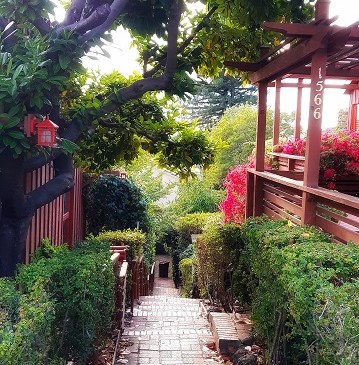
Est-ce un triste constat ? (Sur la photo, prise à Berkeley, le chemin est magnifique, mais la destination, une poubelle, ne l’est pas tellement.) Je ne sais pas. Tout ce que je sais c’est qu’à l’instant où j’écris ces mots, je me prépare à manger des crêpes pour le dîner. La pâte est prête dans le frigo, la crêpière est déballée, la table est presque mise. Je meurs d’impatience (et de faim), et en même temps je voudrais que cet instant dure toujours. J’y suis bien.

13/06/2020 – My grandmother’s house

I had this really strange experience today. I went to my grandmother’s house, one of the most familiar places ever for me, and yet, because of my time in the US and the stay-at-homer order, I felt completely defamiliarized with it. To be more precise, it felt like I was rediscovering my familiarity with the place where I spent so many summer weeks with my cousins. This feeling was so strong and so strange that I did my best to register it, to breathe it in and to record every little feeling and sensation it brought me.

They say that olfactory memory is the strongest – or at least one of the strongest – sense of memory that we have. And indeed, as I rediscovered each room, each with its peculiar smell, so many memories came flooding back, memories half-forgotten that I hadn’t thought about for more than a decade sometimes. I felt like I was an amnesiac who was suddenly recovering everything at once, like almost every single memory associated with my grandmother’s house came rushing back at the same time, painting me the broadest image possible of the time I spent there.

It’s really strange how that house fits in my memory. On the one hand, I associate it with some of the best moments of my life, wonderful days and evenings of Summer fun and mischief with my two favorite cousins. But it is also a recurrent setting for my nightmares, for some reason. For instance, when I have nightmares about bats (they freaked me out way before covid), they’re often set in a dark corner of that house.

The most magical room in my grandmother’s house is the attic. It’s a place where my dad and his brothers and sisters would play around as children, and us grandchildren picked up the torch and somehow made it this place that was ours within our grandparents’ home. It was and still is, by far, my favorite place in the house. But it also retains an unsettling character in my mind, for some unexplainable reason.

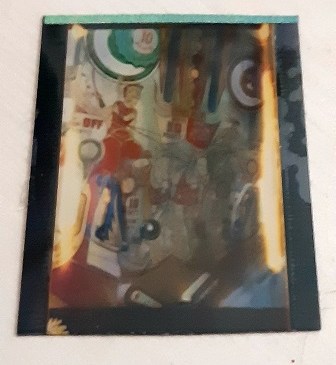
The most fascinating aspect of this place is its furniture, consisting mostly of old, discardable furniture actually. Old TV sets from the 70s and 80s can be found there, as well as old Christmas ornaments, old toys, old chairs, old books, old camping equipment, old suitcases, … There’s also an old bed in which my cousin pledged to sleep a whole night once, but of course he never did because there are way too many spiders and god knows what kinds of other creatures there. There’s a sort of wobbly couch that is actually the whole backseat of an old car of theirs. My brother turned it into what he called a “roller-coaster ride”. There’s a bunch of stuff my cousins and I brought in order to turn it even more into a playroom for us. The walls are covered with the graffities and drawings we made in chalk throughout the years. There are also some planks, old chairs and ski poles that we put together in order to create a “spaceship”, using and old Puy du Fou map for our travels. And there’s that TV that my dad tried – and failed, or at least gave up trying – to turn into a robot.

And, most of all, there are a pinball machine and a foosball table bought by my dad from a café somewhere in France when he was a young adult. The coolest pieces of furniture, the source of our pride. Strangely enough, as much as I have always loved the pinball machine – and I really do – it kind of terrified me as well as a child. There was a mechanism that prevented people from shaking it too much. If you did, often because your ball had gotten stuck somewhere, this “tilt” mechanism was triggered and not only did the machine become completely unresponsive – meaning you inevitably lost – but it also started making this loud, awful, shrill noise that you could only stop by flipping the switch of the machine. And sometimes even that didn’t work. You had to try a few times or wait a few days instead. I used to have nightmares about this noise, and it also made the room a bit dauting, this place that I loved but where not everything was under my control. (Once, I also dreamed that Lady Gaga went hiding from the police into my grandma’s attic so it’s not all bad though.)

It’s hard to articulate how ambivalent my feelings are about this place in general, but today the unheimlich reached a whole new level. Usually the only dust to be found there is in the attic (my grandma has a maid).But today it felt like there was dust everywhere, and especially on my memories, and I was the archeologist going through it, making sense of it, like I was slowly easing back into my old, French life after those months abroad. Is it what it feels like to grow up? Is my childhood becoming increasingly harder to reach? It’s both scary and fascinating…

09/06/2020 – Goodnight White Pride

I’m completely blown away by what we are seeing in the US right now – and really all over the world, including in France – so many people coming together to protest against racism and police violence. It’s incredible to watch history in the making and it fills me with so much hope for the future.

Which reminded me of this text I wrote about three years ago, after seeing a sticker on somebody’s bag at my uni’s library:

Goodnight

Say goodnight

White pride

We’ll be alright

In the tide

*

What’re you so afraid of?

People coming together?

Or is it friendship and love?

That whole world outside your little self

Don’t you know?

This world’s only ever been grey

And you only grow

If you live for today

If you open your hand

*

We will be one

No matter what you say

We’ll fight everyday

With stories and songs

Hate’s not meant to last

You’re living in the past

Say goodnight

Because you know

Say goodnight

That tomorrow

Will be ours

18/04/2020 – COVID-19’d America

I did not leave the US because I was afraid of catching it. I did not leave the US to go back to my friends and family. I did not leave the US because I suspected places might remain closed until the end of my visa. I did think all these things. But they are not the true reason for which I left the US. I left because I knew there would be a disaster in this country.

We knew from mid-to-late February that the virus was definitely coming, and we were preparing ourselves for the possibility of schools closing and the need to start working from home. When I became sick with an infection in late February, I was able to witness first-hand how the health services were preparing for a wave of sick people, just as I could see on social media how France was telling its population to self-isolate if they were experiencing symptoms or knew somebody who was, and to call their doctors instead of going to the ER and risking mass contamination. Still, at that point the virus still seemed like a disturbance rather than the source of a worldwide crisis, and I remained excited for the months I still had to spend in the US, enthusiastically planning new trips and visits.

I started suspecting that things were going to get bad a little before mid-March. By then, my social media newsfeeds has begun to be flooded with information and videos from Italy, a lot of them consisting in warnings for other countries. They were telling us how they were painfully learning that the virus was much more dangerous than we initially thought, back when it only affected Asian countries and rare tourists; that it was much worse than the flu and that it wasn’t only the elderly who was dying, though they did constitute the majority of the victims. At this point, the situation in France was slowly escalating into a national crisis as more and more people were getting sick (with not too many dying yet, still) and the government started changing their discourse. Day after day, they started introducing new restrictions, banning large gatherings, cancelling cultural events and asking people to limit their travels. All the while reassuring us that we did not need masks (of course, the truth was that we didn’t have any) and that there was no need for schools or places like Disneyland Paris to close.

I think that, paradoxically, it was the US ban on European travelers that gave me a first signal that something huge and unprecedented was brewing. When my father had first mentioned it, about a month earlier, I was utterly convinced that it was impossible, that the US would never do such a thing, that globalization was too big to be stopped. It would not take long for me to understand how mistaken I had been. Two days later, OUSD was finally closing all of their schools (at first only for a few weeks), days after San Francisco and Berkeley had made the same decision.

Then, as I watched the wave wash over Europe, and European leaders taking unprecedented measures, I started realizing just how bad it would be. From then on, lockdown made total sense to me and I resolved to comply with all these necessary restrictions. When Macron gave his “we are at war” speech, I knew that his tone was appropriate. I had finally stopped underestimating Covid-19. But, unfortunately, the same could not have been said for many Californians and Americans around me. They didn’t know their country would be hit harder than it had ever been since 1929, or maybe ever. They did not know that it was already too late to avoid a tragedy.

There were several factors that made me realize a little earlier than others (but probably way later than experts) that the US would be hit differently than other Western countries. Some of them have to do with current politics, of course, but some are also deeply engrained in the American culture and its policies (or lack thereof), for which we could not really blame the current administration.

First, as I mentioned it previously, I had one advantage over most Americans, and it resided in the fact that I was not American. This fact, which would not have mattered all that much in other circumstances, meant that I had a vantage point. One that had to do with social media and the way they work. Because my social media accounts are considered “French” – based in France, where I usually live – because I follow a lot of French or European media and people, because most of my online friends are French or European, most of what I saw on my social media newsfeeds could not have been seen by Americans. Instead of watching mostly CNN or Fox News reports – which had a lot to do with the primaries at that point – or reading from my relatives in such or such American state, most of what I was seeing related to the epidemic and its devastating effects on Europe. I was seeing warnings from this friend met in Oxford who now lived in Italy, I was seeing French celebrities and officials get sick one by one, I was seeing dozens of videos of health workers begging people to stay at home in order to save lives. I had a pretty accurate picture of what was going on in Europe and of the virus itself. And there was no reason why the US would not suffer the same fate, in fact it was already on the way. I was witnessing the future of the United States, and I was one of the rare people to do so at the time. Apart from a certain degree of denial, the American public remained largely unaware of the European situation.

This is not the only reason why many Americans did not see it coming. As of early 2020, the United States was, as many other Western democracies, in a state of extreme political polarization. Before Donald Trump’s 2016 election, but even more so after, bipartisanship and cross-parties cooperation had given way to a culture of staunch partisanship. I strongly believe that social media and their mechanisms that exacerbate both political opinions and division between opposing camps are to blame here. People used to believe we could build bridges, and now they want to build walls. They used to think democracy meant that a plurality of opinions was enriching, and now people are being “canceled”. There were consensuses, now there are facts and alternative facts. Everybody, and I the first, is willing to bend facts to their opinions and beliefs, instead of doing the opposite. In many situations, while we used to adhere to political parties and politicians according to the policies they advocated, it is now our adherence to a party, or at least our rejection of a party, which shapes and indicates how we feel about the world. This is not helping.

Because allegiance and personal feelings have started to matter more than consensual truths and expertise, because experts have now become, maybe sometimes rightfully so, the embodiment of a self-serving elite who cannot relate to the daily concerns of the common people, distrust and defiance against the media and scientists is greater than ever. They’re not the repository of knowledge and method that they used to be. They have become fallible oligarchs hiding their incompetence behind their degrees; at worst, collaborators, and at best, sellouts. Trump said that experts were “terrible”. But who should you turn to then? Self-declared, unproven experts, like him? Your gut-feeling? God? Twitter?

Of course, there is one critical factor I haven’t mentioned yet. Had this crisis taken place pretty much any other year, things would not have gotten that bad. But 2020 is a special year for Trump. It is the year of his only possible reelection – as of the current Constitution at least, you never know what can happen with this guy.

With his reelection on the line, both Trump – and Republicans – and Democrats are de facto acting and communicating strategically, with the goal of winning the majority of votes in November. Some may find this cynical, but it is how politics work, and it is the smart thing to do. Trump’s reelection campaign strategy revolved around the good economic health of the country and its historically low unemployment rate (basically the idea that he would have indeed made America “great again”, though how critical his policies were to this result remains arguable). However, all of this has been swept away by the Coronavirus. Instead, Trump finds himself with a historically high unemployment rate of over 20%, an issue which has forced him to resort to radical measures: stimulus checks. He thus loses one point of criticism over Democrats (notably Biden and Sanders): who’s the socialist now?

What this means is that it is in Trump’s interests to diminish the gravity of the crisis, to pretend that everything is fine and that he’s doing a great job (that also has to do with his egomania), and to reopen the country as quickly as possible in order to try and cut his losses. Hence the delusional Easter reopening. On the other hand, it is in the Democrats’ interests to exaggerate the reality of the crisis, and even to take advantage of the chaotic economic situation in order to show the necessity of “safety net” policies for which they have been advocating for years. The virus, and any analysis of Trump’s handling (or mishandling) of the crisis has therefore become a political argument. In such a context, is anybody even approaching some kind of objective speech?

Some people have called the Coronavirus crisis the new divide of American politics, to be loosely modelled on the preexisting divides between pro-Trumpers and anti-Trumpers, and Republicans and Democrats. The difference is that this last group may be more united than ever in this crisis, while the Trump camp may face defections.

It is mostly for this reason that Trump initially dismissed reports on the upcoming crisis and tried to shift the blame on others (among which China, Europe, the World Health Organization, the states and the Obama administration); only to change his tune when even he, the Denier-of-Proven-Facts-in-Chief, could not deny the reality of the crisis any longer. Of course, this comes as highly unsurprising, since, as CNN’s Chris Cillizza puts it, “What Trump is doing now is what he always does about everything: Attempting to rewrite history so that it looks like he was always the smartest guy in the room, the one person who saw this all coming from a mile away.” This translates into increasingly ridiculous White House briefings that showcase his mythomania more than ever and find him bragging about his disastrous response to the crisis and his unprecedented ratings. He has even adopted Emmanuel Macron’s military lexical field. Anything goes when it comes to avoiding losing face: unsubstantiated accusations, false reassurances, miraculous cures such as a more clement weather or chloroquine… All Trump is really sending is wrong signals.

Unsurprisingly, Faux Fox News has, once more, sided with Trump. Like him, they started by calling the pandemic a “Democratic hoax”, pointing the finger at China and Europe, and turning to the now usual claim that “the flu kills more people every year”. Now that the situation has become impossible to ignore, they’ve started inviting celebrity “doctors” like Dr. Phil or Dr. Oz to say crazy things live, such as comparing the virus to AIDS (that you can only get from someone’s blood) or car crashes and drownings (it’s true that these are highly contagious…). Of course, if that is what you call experts, it makes sense to question their competence. Such fallacious comparisons are served with the usual grossly exaggerated or undermined facts, a good chunk of various conspiracy theories, and outright imaginary figures. It’ll remain broke ‘cause they ain’t gonna fix it.

You put all these things together and what do you get?

A population more confused and divided than ever, who have no idea who and what to believe and what will really happen to them. Some people are in outright denial, some are panicking, some are deluding themselves in thinking that things are going to be okay, some are doing business as usual because they don’t have a choice… Apart from conspiracy theories (one of my friends thought it was simply deaths from the flu and that people were overreacting) some people are even actively counteracting measures and not taking social distancing seriously, which will only delay the end of the crisis and its impact.

If you add this state of extreme political polarization and misinformation to the complexity of levels of government in the United States, you end up with a patchwork of local responses to the crisis, which in the end prevents a coherent national strategy. Cities, counties and states are each coming up with their own measures, trying to balance the factors of health recommendations, economic needs and public approval, all the while adapting to their own local specificities.

It is too easy to put the blame of governors though. It was the federal government’s job to design this strategy and it is only Trump’s unwillingness to take responsibility that has led to local governments filling the void with what they thought would be better (for some) or blind loyalty to Trump and faith in market and religion (for others). Under the guise of supporting state rights, Trump is, as usual, shifting the blame in case of bad news. To summarize: if things get better, it will be thanks to his administration; if things get worse, state governments will be to blame. Overweight-and-totally-not-obese Trump doesn’t care about the real world, he’ll have his cake and eat it too. Apart from Trump’s egomania (what else is new?), the resulting patchwork of responses means that the crisis will be drawn out, probably even more than it would already have been in this continent-sized country. What we are seeing is only the beginning.

I remain unconvinced, however, that things would have been drastically better under the precedent administration. Sure, President Obama would have taken things more seriously and shown the responsibility of the highly competent leader that he is. But this level of partisanship is not completely new to the Trump era, at least on the side of the Republicans. Considering that President Obama faced an unprecedented amount of hate and dubiously justified criticism from them, it is easy to imagine that a measure such as a federal stay-at-home order would have been met with much hostility and defiance. People would have accused him of acting like a dictator and suspicions of a conspiracy (the famous “Democratic hoax”) would have been rampant. Then, how would the Obama administration have faced calls to reopen the country?

Nonetheless, President Obama would have acted with dignity and dutifulness, two qualities foreign to Trump. There would not have been any outright lies or coddling, no self-congratulatory statements, but plainly stated facts and hard, sobering truth. Unlike Trump, Obama would have cared more about the well-being of American people than about his popularity or his reelection.

But most of all, the problem resides with the American society itself. You cannot change a whole country in a matter of weeks, and the best measures would only amount to a patch on a long-running blowout. This doesn’t have much to do with Obama or Trump. The truth is that the American way is failing and needs to be thoroughly remodeled, without which it will meet its end. It’s time to put a little equality in all that freedom.

In many ways, the richest country in the world looks like a third-world country. The lack of safety net has kept a huge part of the population in poverty, or on the verge of poverty, for decades. No other developed country has so many retired people forced keep working in order to eat or so many illegals occupying key jobs in industries (especially the food industry) while retaining a precarious status. An unofficial socio-economic segregation has kept African-Americans in dire situations, with little prospect of improvement. And it’s not getting any better, with or without the virus. Inequalities are rising and the wealth gap has never been so big, never has there been such a big homeless population in places like San Francisco or Los Angeles. And now, with the unemployment rate skyrocketing, more and more people will find themselves dependent on food banks, or losing their home, or unable to borrow money and to get healthcare.

Healthcare access has historically been a problem, and it will only get worse as people lose their insurances along with their jobs. And even those who do have an insurance are in no way guaranteed a cheap – let alone free – care. The system is well-established, and everything has been designed to make the patient pay as much as possible and make the insurance and the hospital as rich as possible. These people with little to no coverage have been discouraged from taking care of their health for years. This has made them chronically fragile and they will be the first ones to die. Not to mention the rates of obesity and diabetes (among which, probably, Trump himself). Everywhere I look, all I can see is a health disaster. And it’s even risible when one looks at the amount of money being injected in the health industry every year. I don’t know where it goes, but I know that nurses in New York had to wear trash bags to work and that nobody seems to have enough tests.

And then, I remember that, in this country, people are allowed to carry rifles as a constitutional right. And that the notion of a popular upheaval against an autocratic power that does not defend the interests of the people is culturally valued. And that a lot of people are bound to get angry in the next few months, for a lot of reasons…

This is why I left.

The Coronavirus did not wreck America. America wrecked itself. The crisis only precipitated a tragedy that was coming anyway. It did not so much worsen the wealth gap in the country as it revealed it, in all its ugliness. What will happen to these people, those who will survive only to find themselves bankrupts? And what will become of this country, once so glorious and powerful? I cannot help but think of Renaud’s line: « Ce pays que j’aimais tellement, serait-il/finalement colosse aux pieds d’argile ? »

This leaves me with a lot of interrogations: What is freedom? What are its costs? What is democracy worth when confusion, misinformation and lack of education seem to pervert its principles?

But, most of all, these observations leave me with a bitter taste, one that truly makes me sick. So many deaths that could have been avoided, so many more to come…

To be continued…
07/03/2020 – Trying not to obsess about it

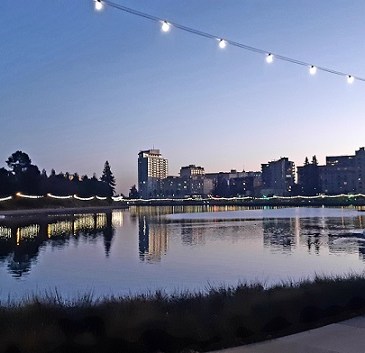
Alors que je marchais autour du lac Merritt, une phrase entendue au hasard m’a inspirée, et puis je me suis imaginée en quarantaine pour le coronavirus, comme cela risque d’arriver bientôt.

Je n’ai réussi à écrire que des fragments :

Ne voir du monde que son reflet

A la surface d’une flaque d’eau

Se pencher à la fenêtre

Pour n’en percevoir que les échos

*

“Whatever. I’m trying not to obsess about it.

And failing, obviously.”

When the world ends, at least

I will have had my words

*

In questi tempi di fame

Per qualcosa più grande

Per una forma di fede

L’unica cosa che c’è

È il cielo sopra di noi

Il cielo sopra di noi

Il cielo sopra di noi

Il cielo sopra di noi

Il cielo sopra di noi

*

Trying to hold onto me

I can’t hold onto me

05/03/2020 – L’inquiétante étrangeté des VHS

C’est toujours étrange quand on a pensé quelque chose depuis longtemps et que tout d’un coup, sans prévenir, on entend des gens en parler. C’est d’autant plus étrange quand il s’agit d’une impression qu’on a depuis l’enfance. Ça m’est arrivé aujourd’hui en écoutant l’émission « Par Jupiter » de France Inter dans laquelle était invitée la musicienne Jennifer Ayache du groupe Superbus.

Les chroniqueurs et l’invitée discutaient de l’attrait qu’on peut avoir pour le rétro, notamment en matière de technologie. Ils ont ensuite parlé du dernier clip de Superbus qui a été tourné avec une caméra VHS par nostalgie. Mélanie Bauer a alors commenté : « y a un côté anxiogène […] dans la VHS », puis plus tard « même un truc joyeux, ça devient dérangeant ». Charline Vanhoenacker, elle, a ajouté : « y a une tension ».

J’ai toujours eu une relation ambivalente à la VHS. D’un côté, c’est les souvenirs des films regardés à la maison le weekend, chez mes grands-parents pendant les vacances, ou sur le temps de midi à l’école les jours de pluie. Puisqu’aucune de ces collections vidéo n’était astronomique, c’était souvent les mêmes films que je regardais encore et encore. Je me souviens même qu’avec mes cousins on trouvait hilarant de rembobiner la cassette à faible vitesse, car cela nous permettait de regarder le film à l’envers, et donc toutes les actions devenaient étranges et les gags plus drôles encore. On utilisait encore aussi la VHS pour enregistrer les émissions télés qu’on ne voulait pas manquer, ou bien celles qu’on souhaitait conserver. Je ne compte pas les fois où mon père m’a enregistré la Star Academy. J’ai également toujours adoré revisionner les films de familles enregistrés sur des VHS, bien que certains se soient fortement dégradés avec le temps.

Et pourtant, j’ai toujours eu un rapport tendu avec les cassettes vidéo. Déjà, il y a toujours eu cette crainte d’abimer la cassette, ou bien que ce soit le magnétoscope (c’est incroyable comme ce mot me semble daté !) qui la « mange » carrément. Combien de VHS a-t-on retrouvées inutilisables à leur sortie de l’appareil ? Mais, par-dessus tout, c’est la fin des cassettes que j’attendais toujours avec énormément d’appréhension. Dès que je sentais la fin du programme approcher, je me jetais sur la télécommande pour interrompre la lecture. Tout ça pour éviter ce que certains appellent le screen of death (bien que je ne sois pas sûre que ce terme s’applique bien ici, puisqu’il fait normalement référence aux écrans d’erreur des systèmes d’exploitation. Mais j’aime beaucoup la connotation lugubre de cette expression !).

J’ignore si c’est quelque chose de particulier au magnétoscope de mon enfance, ou bien à certaines cassettes en particulier, mais je me rappelle que, les rares fois où je n’ai pas été assez rapide, l’écran qui est apparu à la fin du programme était tout bonnement terrifiant. Des vagues grisâtres traversaient une étendue noire dans une bruit terrible. Une vision insoutenable pour l’enfant que j’étais, si bien que je m’arrangeais toujours pour arrêter la cassette juste avant. J’ai tendance à penser que ce genre d’angoisses irrationnelles rencontrées pendant l’enfance gardent une influence durable sur l’adulte qu’on devient.

Je ne sais pas exactement pourquoi cette représentation du passé et de sa technologie obsolète me met si mal à l’aise, au même titre que les locomotives et les horloges, entre autres. Dans ce cas précis, l’enfance représente en général une période idéalisée de bonheur et d’insouciance qu’on regrette à l’âge adulte, et je ne fais pas exception. Et pourtant, les images VHS restent profondément anxiogènes et dérangeantes pour moi. Lorsque mon œil perçoit, sans s’y attendre, leurs images d’une qualité médiocre, traversées de vagues, à la couleur et au son qui ont tendance à « dérailler », qui « sautent », c’est mon corps tout entier qui est parcouru d’un frisson d’effroi. Et il semble que je ne sois pas la seule à le ressentir.

18/02/2020 – Deux exemples révélateurs de la culture consumériste américaine

Attention, je parle ici bien de culture consumériste. Dans le sens « société de consommation » et non “consumer society”. On voudrait nous faire croire que cette société nous appartient, qu’elle est synonyme de notre liberté, sans doute même partie intégrante. Comme si cette société n’était là que pour servir le consommateur. Certes, elle tourne bien autour de lui. Mais il est plus souvent le dindon de la farce.

J’ai tout de même le sentiment qu’on est bien mieux lotis en Europe qu’aux Etats-Unis. Déjà, je trouve que le consumérisme est bien moins omniprésent. Je pense aussi que le consommateur européen est mieux informé et protégé que le consommateur américain. Parmi les obligations légales qui nous facilitent la vie et qui me manquent tant aux Etats-Unis :

– l’affichage des prix au kilo dans les magasins : il est tellement plus facile de comparer le prix de deux produits lorsque cette information est indiquée et qu’on n’a pas à la calculer soi-même, surtout quand le packaging mentionne aussi une quantité gratuite pour bien nous embrouiller encore plus

– la composition des produits indiquée en pourcentage : bien sûr, en France aussi ils aiment nous indiquer leur composition « par portion », portion qui est totalement aléatoire et arbitraire, et à laquelle on aime souvent rajouter – notamment sur les paquets de céréales – une quantité tout aussi arbitraire de lait, histoire de bien rendre les chiffres incompréhensibles. Heureusement, il y a toujours cette colonne « pour 100 grammes » qui permet d’y voir un peu plus clair

Deux autres exemples aussi insupportables pour une européenne, mais bien plus justifiés : les pourboires (liés à l’absence de revenu minimum digne de ce nom dans la restauration ainsi qu’à une habitude culturelle profondément ancrée) et le fait que les taxes ne soient jamais incluses dans les prix, sauf pour l’alcool (elles sont trop fluctuantes, et encore une fois cette habitude est bien ancrée pour les américains). Je déteste cette impression constante de me faire avoir car je dois toujours payer plus que ce dont j’avais eu l’impression au début.

09/01/2020 – L’appropriation

Cela fait un moment que je pense à écrire sur ce sujet, et je m’y mets enfin, à un moment où je me sens suffisamment ébranlée, suffisamment déstabilisée par certains événements pour que ma sensibilité littéraire ait atteint son paroxysme.

Il y a des phrases – ou plutôt des fragments – qui me collent à la peau. Je les rencontre souvent un peu par hasard, et ils n’ont pas forcément un sens si fort dans leur contexte d’origine. Mais arrachés à ce contexte, ballottés par les flots – et bien souvent reflux – de mes pensées, ils deviennent autre chose. Sans forcément que la raison en soit évidente, ils deviennent pour moi soit la caractérisation parfaite de ce que je vis ou ressens, soit un mantra, soit encore une image d’une grande poésie.

Parmi ces nombreuses phrases qui me restent en tête, un premier exemple, issu d’une chanson intitulée « Saluto l’inverno » par la musicienne italienne Paola Turci. Cette chanson, comme je l’interprète, traite de l’univers des rêves et du caractère spécifique des rêveurs. La phrase « Tra il cielo e l’inverno » est une que j’affectionne tout particulièrement. « Entre le ciel et l’hiver » littéralement. Mais je crois aussi y lire un jeu de mot avec le mot « inferno » : « entre le ciel et l’enfer ». J’ai du mal à expliquer exactement pourquoi ce fragment me fascine, en dehors du jeu de mots. Peut-être est-ce parce qu’il décrit un état liminaire, un peu comme la chanson elle-même traite de cet état entre l’éveil et le sommeil, entre le conscient et l’inconscient.

Autre exemple. Aujourd’hui, j’ai lu un poème de T.S. Eliot intitulé « The Love Song of J. Alfred Prufrock », dont j’avais entendu parler précédemment dans un article qui le présentait comme le poème ultime sur le thème du flâneur. (J’ai beau avoir fini mon mémoire depuis maintenant six mois, je dois encore me retenir pour ne pas mettre le mot « flâneur » en italique !) J’ai enfin lu ce poème, une semaine après l’article. Bien que je reconnaisse sa valeur et la qualité de sa composition, je dois bien admettre que ce poème n’a pas été une révélation pour moi. En revanche, alors que je me préparais mentalement à écrire sur ma situation personnelle quelque peu morose, une phrase m’a sauté aux yeux : « I do not think that they will sing to me ».

Cette phrase, dont j’ai déjà oublié le contexte qui n’a que bien peu d’importance pour moi, m’a semblé correspondre parfaitement à mon état d’esprit de ces derniers jours : stressée, déprimée, pessimiste. Elle représente à la fois mon impression que l’avenir proche ne va pas être plaisant, et mon sentiment d’injustice lié à cette situation particulière qui me met sur un pied d’inégalité par rapport à ceux desquels je devrais être l’égale. Elle me fait penser à l’idée d’un futur heureux et plein d’espoir (type « lendemains qui chantent ») mais niée par le narrateur. « Je n’en ferai pas partie », « il n’est pas pour moi, cet avenir radieux ». Voilà ce que j’y lis au moment présent. Il est bien possible que cette phrase m’ait plu dans d’autres circonstances également. Il y a quelque chose qui me touche profondément dans cette formule, dans ce qu’elle suggère, bien au-delà de ce que j’y inscris en tant que lectrice. Si j’adhère aux thèses d’Iser, je ne suis pas une extrémiste pour autant. Je sais reconnaître sa valeur au langage, à l’auteur et aux possibilités de composition littéraires. Mais, parce que je l’ai lue à ce moment précis, elle figurera dans mon futur écrit (peut-être un poème ?), et elle me restera encore longtemps en tête, quitte à me hanter, même, en ces prochains jours d’incertitude.

Qui a dit que l’appropriation était un phénomène négatif ? Je crois que c’est une des plus belles choses que l’humanité connaisse. L’appropriation est à la base de toute forme d’art, dans cet immense partage intemporel qu’est la culture humaine.

Down Post Avenue at Night, Alone

It’s only a forty minutes’ walk
But it’s a lot for most Americans
Even I rarely walk that much in Paris
Here it’s dangerous

I just saw Parasite
I don’t know if it’s because it’s still lingering in my brain
But I feel like this is not real life
Like I’m not me
Like I’m playing role

No one here knows who I am
I could be one of those wealthy San Franciscans
Or one of those poor people
But really neither
I’m something in between
Lost in the nothingness of that betweenness

Walking alone, among these people
Only stopping at red lights
I feel like I know what it’s like to be in the margins
To be slipping through the cracks

The streets are different than during the day
Even though they’re the same
There’s a different vibe
They’re mostly empty, quiet somehow
Only a few homeless people here and there
I wonder if people think I’m one of them
Because of the way I’m dressed – a hoodie, converse shoes
Because I’m walking alone in the night

I don’t want to seem like one of them
So I hold my head up high
And try to look curious and amused by my surroundings
To show how exotic it all is
And how I don’t belong here, I’m just passing through
They’re drunk, high, crazy
They can’t walk straight
And I remind myself that I’m a girl, young, white, blond
People can see I’m not one of them

There’s bread on the floor
Don’t step on the bread, he says
The joke doesn’t come at first
And then it’s the English that doesn’t
(We) don’t wanna make it dirty, I say
I wonder if he heard my we,
Or if he just thought I was the subject in this sentence

Then I reach a richer place
Bars, music, people outside on the phone
Eating, drinking, having fun
I think of the flood in the movie
And the rich family’s party on the next day
Two worlds apart, neatly separated
When they really are juxtaposed

A collage
The only way art can try to not be artificial
When it is being its most artificial
To reveal that all boundaries are artificial

You can try to stop things from overflowing into one another
You can draw lines
But you can never forget
That all things must converge
And so I make them converge
Because then I become the glue
That holds it all together
Then I’m not crazy
Merely post-modern

I think of my mind, my I/eye
As a filter
For some reason this reminds me of a cigarette
Are my thoughts my own poison?

People speak French
You tèking ze kèze?

I pass by the Academy of Art University
It looks fancy enough, like the other buildings here
There’s a homeless guy sleeping at the entrance
I think that it really represents the city of SF
The violence of inequalities
Like in the movie
The way we constantly collide
How it will end badly
It’s the only way
I see Hermès
And remember we are no different in Paris

I reach Montgomery Street
Finally
It’s late

Having fed my hungry eyes
And worked up my restless mind
I made it to the bus
That’ll take me safely
Back to Oakland

13/11/2019 – Les Etats-Unis

Exactement trois mois que je suis aux Etats-Unis. Je le soupçonnais par le passé, mais je le sais désormais : ce pays n’est pas pour moi. Je l’aime pour son exotisme, pour ses excès, pour la fascination qu’il exerce sur moi. Mais ce ne sera jamais mon chez moi.

J’ai remarqué plusieurs grandes tendances qui font partie de ce que certains appelleraient la « mentalité » américaine. Je les connaissais déjà toutes plus ou moins, notamment à travers mes cours de civilisation américaine, mais désormais elles se vérifient.

L’une d’entre elles c’est la notion de danger comme quelque chose de familier, voire même de normal. Dans ce pays, le danger, sous toutes ses formes, est omniprésent. On est en danger à cause du port d’armes. On est en danger à cause de toutes ces substances chimiques utilisées dans l’alimentation ou d’autres produits de consommation. On est en danger à cause de la criminalité qui est relativement banale (en particulier à Oakland). On est en danger si on se promène seul le soir dans la rue. On est en danger car des animaux sauvages vivent à deux pas. On est en danger car les accidents de la route sont bien plus courants. On est en danger car sur la route il n’y a pas toujours de trottoir pour circuler en toute sécurité. Et ça fait partie de la vie, c’est simplement une réalité à accepter.

Une autre notion omniprésente et qui m’est difficilement supportable : la société de consommation. Les Etats-Unis sont un pays capitaliste, et gare à qui tenterait de l’oublier. Les injonctions à consommer sont partout dans la rue. C’est ça le rêve américain : la liberté de consommer. Tout n’est que magasin ou restaurant. Tout n’est que marque ou chaîne, standardisé au possible. Et si la marque est trop chère, ce n’est pas grave, il y a une solution pour ça : les magasins au rabais. On y achète aussi des marques mais moins chères. Comme pour dire aux plus pauvres « ça ne fait rien, vous aussi vous pouvez faire partie de la fête de la conformité. Et plus tard, quand vous aurez plus d’argent, vous pourrez vous payer la vraie marque directement. » “The real thing” Comme s’ils s’élevaient socialement et économiquement à travers leur consommation de marque. Comme si c’était la chose à laquelle on devait tous aspirer : posséder un t-shirt blanc uni uniquement orné du symbole tribande. Ça vend du rêve ! Tout est fait pour vendre et tout est bon pour vendre. Ad nauseam.

Un autre problème que j’ai avec le capitalisme c’est que tout est ramené à son prix, à ce qu’il peut rapporter. Ce système universitaire et ce système de santé – bien plus étroitement liés qu’on ne le pense de prime abord – qui essaient de faire un maximum de profit, excluant au passage les plus défavorisés. Quelle plus-value va-t-on pouvoir faire sur chaque compresse utilisée pendant l’opération qui sauvera une vie. Quel examen vaguement utile on va pouvoir prescrire au patient inquiet. Et comment on justifie les coûts exorbitants en évoquant la qualité du soin ou de l’enseignement dispensé. Comme si l’excellence devait se facturer.

Directement issu de ce capitalisme, l’esprit de compétition qui aggrave encore les inégalités. On note tout, y compris les écoles, et on inscrit son enfant dans la mieux notée, quand on a les moyens de se la permettre. Et puis du coup on demande à ce qu’elle soit financée, au détriment de l’école publique défaillante dont le niveau ne cesse de chuter puisqu’il n’y a aucune diversité socio-économique (ou raciale, puisque dans ce pays ce n’est pas un gros mot). La ségrégation a beau être interdite, il vaut quand même mieux que tout le monde reste bien à sa place.

Cet esprit de compétition qui s’infiltre dans de nombreuses autres situations. Les collègues qui se tirent dans les pattes au lieu de se soutenir, les gens qui dénoncent les autre pour des broutilles, et ce sourire toujours aux lèvres. Ce que bon nombre de français appelleraient de l’hypocrisie. Ce que bon nombre d’américains considèrent comme de la politesse.

Bien sûr il y a des choses que j’apprécie énormément dans ce pays, comme la variété de cultures, le côté avenant des gens, cette merveilleuse habitude d’organiser des événements collectifs, cette positivité dans l’éducation des enfants. Mais ça ne suffit pas à calmer ma nausée, celle qui me prend quand je vois tout cet individualisme et ce consumérisme.

Plus que jamais : je suis française et européenne, et fière de l’être. Ma place est en France, dans mon pays. Pas seulement mon pays de naissance, mais aussi le pays que désormais je choisis, parmi toutes ces autres possibilités. Celui dans lequel je reconnais mes valeurs.

C’est sûrement aussi pour ça que je suis si fascinée par les Etats-Unis. Pour leur différence qui m’interpelle, m’amène à questionner mes valeurs et mon modèle, et me pousse dans mes retranchements.