Sick Degrees of Separation

*

I closed the door and deleted your number
I went quietly, no more Mondays at eight
‘cause on the threshold I saw you hesitate
Now though we must live just like strangers
I can’t bring myself not to count
On another delusion to mount

*

I’d look up and you were all I could see
Five-letter words scrawled under bleachers
(Alright, four, now shut it, math teachers)
I couldn’t help it, it was just so easy
To add it all up, spread it around
I covered it up, took it all down

*

I wouldn’t learn to leave it alone
Always three cheers to spare
On my driest days of despair
I’ve never been one to tag along
Yet I followed you to the nines
And you lost me every time

*

Yet I waited and wasted away, my dear
And my fate is faded in grey, I fear
That hateful asymmetry
The lines have gone dead
And you, always twelve steps ahead
And your reasons, x and y and z

*

And I still wash up on those broken heavens
Craving their quickest fixture
Everything is at sixes and sevens
Stealing what wasn’t there is no theft
Subtract all that away and what’s left?
Go figure

*

There isn’t much left to do
When the result is always fifty-two
If I still miss it, why can’t you?
Pink paint bleeds into blue
Feelings that I can’t undo
Waiting, waiting

My Heart Is

xxxx

A question
Mark
My words
(Wasn’t it cats and cockroaches?)

*

Not cockroaches, but cobwebs
In the rain, and I’m always in the wrong
Lane
(It’s driving me insane)

*

Stop it I can’t think yet
I think too much
With all these voices in my head
(“Sorry, I’m not home right now”)

*

What
You think you’re special/think
You’re something else?
(insert canned laughter)

*

It’s late and I’ve been overanxious and
I’ve probably been watching too much Friends
But living twenty-five years ago is such a comfort
(Has life always been this way?)

*

They had cable and answering machines
And probably not as much empty space
To fill with doubts
(My insides are blue)

*

Maybe all rine and no heart
Will be the answer for now
Vacating the premises
(“Leave a msg and I’ll call you back”)

Fear, Itself

No more chess, no more queen’s gambit, thank you
Now’s the time for sudocoups
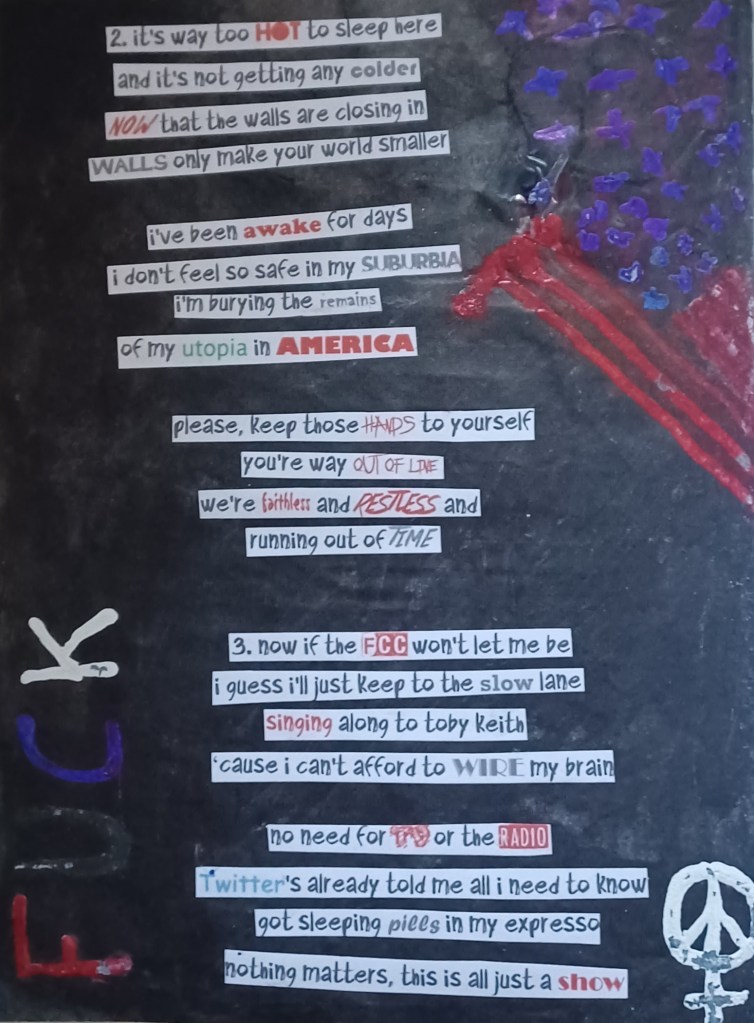
Fuck fake news and fuck you too
Open your eyes and join the queue

*

It’s time to crash this party
Pick a side or a bone
It’s time to pour the tea
Take a red pill or a pillow

*

The message’s pretty clear
It’s written in capitol letters
The future, the end is near
It can only get bitter

*

All things seem confirmation
Bros and urobros
All of us high on information
Stuffed sick with sloppy joes

*

I wonder who started that caravan
That small town serenade
That storms and drops
Into darker days

Parfois j’oublie

« Je fais souvent ce rêve/étrange et pénétrant » disait Verlaine, et moi aussi j’ai des rêves récurrents mais ce ne sont pas les mêmes. Ces temps-ci, il m’est arrivé beaucoup plus souvent que de coutume de me demander si telle où telle chose avait eu lieu pour de vrai ou bien seulement dans un de mes rêves. A chaque fois, je suis partagée entre l’effroi – ça y est, la folie me guette – et la fascination pour cet autre monde, cette autre vie nocturne qui semble vouloir entrer en compétition avec ma vie « normale ».

Car certains de mes rêves – notamment ce cauchemar ou je perds mes dents – sont si récurrents qu’ils pénètrent réellement ma vie éveillée. Tout ce qu’il y a d’irrationnel dans les craintes qu’ils me révèlent ou les espoirs qu’ils me suggèrent fait irruption dans mes considérations ordinaires et je ne sais pas trop quoi en faire, ni à quel « moi » je dois le plus me fier. Celui qui a peur que ses dents tombent ou se cassent subitement ou celui qui se rappelle que mon dentiste a toujours qualifié ma dentition d’adulte d’impeccable ?

Je n’arrive pas à me rappeler de la première fois que j’ai rêvé que je pouvais voler, mais je sais que lorsque j’ai appris l’existence des rêves lucides, c’est la première idée qui me soit venue à l’esprit. Désormais, j’ai rêvé si souvent que je pouvais voler, de manière plus ou moins fastidieuse selon le rêve, qu’il m’arrive parfois d’être surprise en me rappelant que ça n’est pas possible dans la « vraie vie ». Et je crois que c’est une des choses qui m’a le plus touchée dans le roman Song of Solomon de Toni Morrison (que je vénérais déjà bien avant cette lecture).

Déjà, ce roman m’a emmenée dans une parenthèse intellectuelle où il m’était possible d’accepter qu’un être humain puisse s’envoler. Mais finalement cette suspension of disbelief, elle m’était déjà familière.  Ce qui m’a vraiment émerveillée, c’est ce qu’elle m’a fait voir dans l’écriture et la lecture : cette possibilité de m’envoler sans quitter le sol, d’utiliser le langage – ce système si rigide et normalisé parfois – d’une manière fondamentalement puissante et libératrice. Bien sûr, ce n’était pas la première fois que j’en avais conscience. Mais elle a mis des mots – et surtout des images, elle sait si bien les construire – sur cette expérience d’une manière qui m’a profondément émue. Je crois qu’il s’agit là de la plus belle ambition que tout artiste puisse avoir.

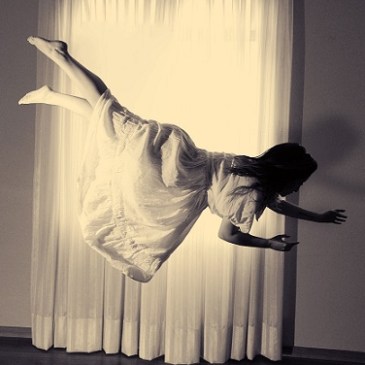
Sometimes I forget

That I can’t fly

For I have spent so many nights

Rushing through the air

That spreading my wings

Feels only natural

*

And it is this part of my being

That revels the most

In your songs of freedom

So that thus roused

It can finally glimpse

How one can fly

Without ever leaving the ground

09/06/2020 – Goodnight White Pride

I’m completely blown away by what we are seeing in the US right now – and really all over the world, including in France – so many people coming together to protest against racism and police violence. It’s incredible to watch history in the making and it fills me with so much hope for the future.

Which reminded me of this text I wrote about three years ago, after seeing a sticker on somebody’s bag at my uni’s library:

Goodnight

Say goodnight

White pride

We’ll be alright

In the tide

*

What’re you so afraid of?

People coming together?

Or is it friendship and love?

That whole world outside your little self

Don’t you know?

This world’s only ever been grey

And you only grow

If you live for today

If you open your hand

*

We will be one

No matter what you say

We’ll fight everyday

With stories and songs

Hate’s not meant to last

You’re living in the past

Say goodnight

Because you know

Say goodnight

That tomorrow

Will be ours

07/03/2020 – Trying not to obsess about it

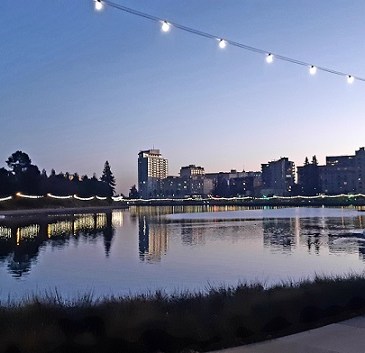
Alors que je marchais autour du lac Merritt, une phrase entendue au hasard m’a inspirée, et puis je me suis imaginée en quarantaine pour le coronavirus, comme cela risque d’arriver bientôt.

Je n’ai réussi à écrire que des fragments :

Ne voir du monde que son reflet

A la surface d’une flaque d’eau

Se pencher à la fenêtre

Pour n’en percevoir que les échos

*

“Whatever. I’m trying not to obsess about it.

And failing, obviously.”

When the world ends, at least

I will have had my words

*

In questi tempi di fame

Per qualcosa più grande

Per una forma di fede

L’unica cosa che c’è

È il cielo sopra di noi

Il cielo sopra di noi

Il cielo sopra di noi

Il cielo sopra di noi

Il cielo sopra di noi

*

Trying to hold onto me

I can’t hold onto me

Down Post Avenue at Night, Alone

It’s only a forty minutes’ walk
But it’s a lot for most Americans
Even I rarely walk that much in Paris
Here it’s dangerous

I just saw Parasite
I don’t know if it’s because it’s still lingering in my brain
But I feel like this is not real life
Like I’m not me
Like I’m playing role

No one here knows who I am
I could be one of those wealthy San Franciscans
Or one of those poor people
But really neither
I’m something in between
Lost in the nothingness of that betweenness

Walking alone, among these people
Only stopping at red lights
I feel like I know what it’s like to be in the margins
To be slipping through the cracks

The streets are different than during the day
Even though they’re the same
There’s a different vibe
They’re mostly empty, quiet somehow
Only a few homeless people here and there
I wonder if people think I’m one of them
Because of the way I’m dressed – a hoodie, converse shoes
Because I’m walking alone in the night

I don’t want to seem like one of them
So I hold my head up high
And try to look curious and amused by my surroundings
To show how exotic it all is
And how I don’t belong here, I’m just passing through
They’re drunk, high, crazy
They can’t walk straight
And I remind myself that I’m a girl, young, white, blond
People can see I’m not one of them

There’s bread on the floor
Don’t step on the bread, he says
The joke doesn’t come at first
And then it’s the English that doesn’t
(We) don’t wanna make it dirty, I say
I wonder if he heard my we,
Or if he just thought I was the subject in this sentence

Then I reach a richer place
Bars, music, people outside on the phone
Eating, drinking, having fun
I think of the flood in the movie
And the rich family’s party on the next day
Two worlds apart, neatly separated
When they really are juxtaposed

A collage
The only way art can try to not be artificial
When it is being its most artificial
To reveal that all boundaries are artificial

You can try to stop things from overflowing into one another
You can draw lines
But you can never forget
That all things must converge
And so I make them converge
Because then I become the glue
That holds it all together
Then I’m not crazy
Merely post-modern

I think of my mind, my I/eye
As a filter
For some reason this reminds me of a cigarette
Are my thoughts my own poison?

People speak French
You tèking ze kèze?

I pass by the Academy of Art University
It looks fancy enough, like the other buildings here
There’s a homeless guy sleeping at the entrance
I think that it really represents the city of SF
The violence of inequalities
Like in the movie
The way we constantly collide
How it will end badly
It’s the only way
I see Hermès
And remember we are no different in Paris

I reach Montgomery Street
Finally
It’s late

Having fed my hungry eyes
And worked up my restless mind
I made it to the bus
That’ll take me safely
Back to Oakland

03/05/2019 – The Locomotive

I am fascinated by the mental picture of a locomotive upside-down. It’s an image I associate with dreams, and thus Surrealism. I think it first came to me from a J’aime Lire story I read many times as a kid. I cannot remember its title but it was about a young orphan and his grandfather, who had managed to build a time-machine, going back in time in order to retrieve a long-destroyed – and thus expensive – painting by some famous painter (I think Chagall?). They are being threatened by thugs who simply want to make money out of it. The boy and his grandfather end up tricking the thugs, I don’t really remember how, and the art remains safe, away from their financial interest. I cannot remember if the painting is shown at all in the book (though my sense of logic tells me yes!) or if I just created its image in my head, but it has been fascinating me ever since.

Years later, I looked for this painting but didn’t find it. I’m pretty sure it was made-up. But I still hold onto this image. I sort of found it when I studied Man Ray and Paul Eluard’s Les mains libres in high school. There’s a drawing entitled “Rêve” that depicts a kind of flying, upside-down locomotive above city buildings, along with the notion, in Eluard’s poem, of a bent Eiffel tower and of twisted bridges. I love both the drawing and the poem because they depict the notion of the familiar being distorted just enough to represent the power of imagination, something that I enjoy both in dreams and in Surrealism, among other things.

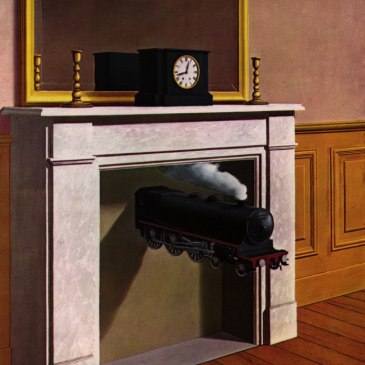
Also in high school, but two years earlier in fact, I came across Magritte’s La durée poignardée and had some sort of revelation. This painting depicts a locomotive coming out of an otherwise empty fireplace. On top of it, there are two candlesticks on each side of a clock, and above them is a mirror. It’s interesting to note that the candlestick on the right has no reflection. To me, the locomotive, emerging at full-speed and on a straight line, seems to stab the fireplace which becomes a tunnel, that is where the title comes from. The locomotive represents modernity, embodied by a machine that overpowers mankind and imposes its rhythm on them. The clock, which represents time, seems to be receding because of the mirror, unlike the locomotive which is going forward. Magritte said this about the painting:

« L’image d’une locomotive est immédiatement familière, son mystère n’est pas perçu. Pour que son mystère soit évoqué, une autre image immédiatement familière – sans mystère – l’image d’une salle à manger a été réunie avec l’image de la locomotive. »

As I was supposed to relate the painting to Surrealism, I wrote that the scene seems “normal” until the insolite element – insolite not because of its content, which is familiar, but because of its unexpected presence which makes it out-of-place – bursts in to break the realism, or rather the illusion of it. The painting associates two pictures which, at first glance, do not belong together, using the fireplace/tunnel as a point of connection, in order to create a feeling of shock in the viewer.

My persistent fascination with this painting led me to write, two years later, the following poem:

Le Progrès Poignardé

Loco, fou est cet engin au rythme effréné

Sifflant l’universelle mélodie du tocsin

Bête fougueuse et anarchiste

Elle disparaît dans l’antre obscure sans laisser d’autre trace

Que des oreilles bourdonnantes et des pensées embrumées

Terrifiante et assassine, sans cesse,

Elle avale l’or ténébreux dans son gosier vorace

Crissant « Charbon ! Charbon ! Charbon ! » comme leitmotiv

There are many ways in which the image of the locomotive keeps coming back to me: most obviously with the Hogwarts Express, but that one does not produce the same effect on me at all. More interestingly, there is Zola’s La bête humaine, also read during my first year of high school, a book that I absolutely loved, especially the scene in which there’s an accident and the locomotive is described as a torn human body. Obviously, my reaction to the Magritte painting was very much influenced by Zola’s novel.

One last example is that of the famous picture of the Montparnasse accident of 1895 which depicts a locomotive hanging from the wall of the first floor of the station that is half demolished. Last year, I wrote in a paper that “The pitch-black locomotive crosses the rectangle of the picture diagonally in a motion that feels very transgressive and is impossible to escape when looking at it. I believe that the black-and-white is very important because it displaces the image both into the past and into the unreality of history. The situation is so irrational that the picture seems to come from a nightmare. To me, it coincides with the idea of the past as a dangerous place of chaos, tragedies and unreason that we may have […] of the middle-ages or of the pre-democracy, pre-consumer society times. It makes us feel both safer about our lifetime – we do not use locomotives anymore, this technology was probably more experimental, this could not happen again – but also more uncertain – if it has happened, it can happen again; technology can be dangerous.”

This is what the image of the locomotive ultimately is to me: a symbol of a dark (and somehow also black-and-white), scary (for some reason), remote past. It is also something I sense in the image of the Normandy clock. My grandparents own one, and I was absolutely terrified of it as a child. Nowadays, still, I have very mixed feelings about it. Thinking about it makes me uneasy, and yet I am so attached to it that I would love to be able to own it after the death of my grand-parents (that probably has to do with the fact that my grand-father is himself quite attached to it). Hearing it ring in the middle of the night is both chilling when I think about it, and also a source of comfort when I actually hear it because it means that I am in a place where I feel happy and safe.

Ultimately, apart from this actual object, both Normandy clocks and locomotives make me think about time, scary time.
Train Journey

We were 5

He sat next to me
I felt him looking at Brown
Or was he already looking at the dog?
On my left, they were having a conversation
Each one on their phone
Speaking in their own language
At such intervals
That it sounded like a dialogue
While he pat her dog, from my right
Acting as if he knew her

She left and he said goodbye, dropping his phone
Did they know one another, after all?
Or was she just too polite?
And he too outside of our stupid conventions?
He kept muttering about the dog
I didn’t answer, letting him think that I spoke no French
Since my book was in English
No one would know
Until we reached a new station

And then I was 1

En rentrant, je m’assieds face à l’écran
La réalité explose
Et le souvenir passe par le filtre de l’imagination